3.1.2 AS and A-level
Amount of substance
Formulas, the mole, equations, gases, empirical formulas, solutions and titrations.
The lessons, in order
Work through these in order. Lessons marked Coming soon are still being built.
-
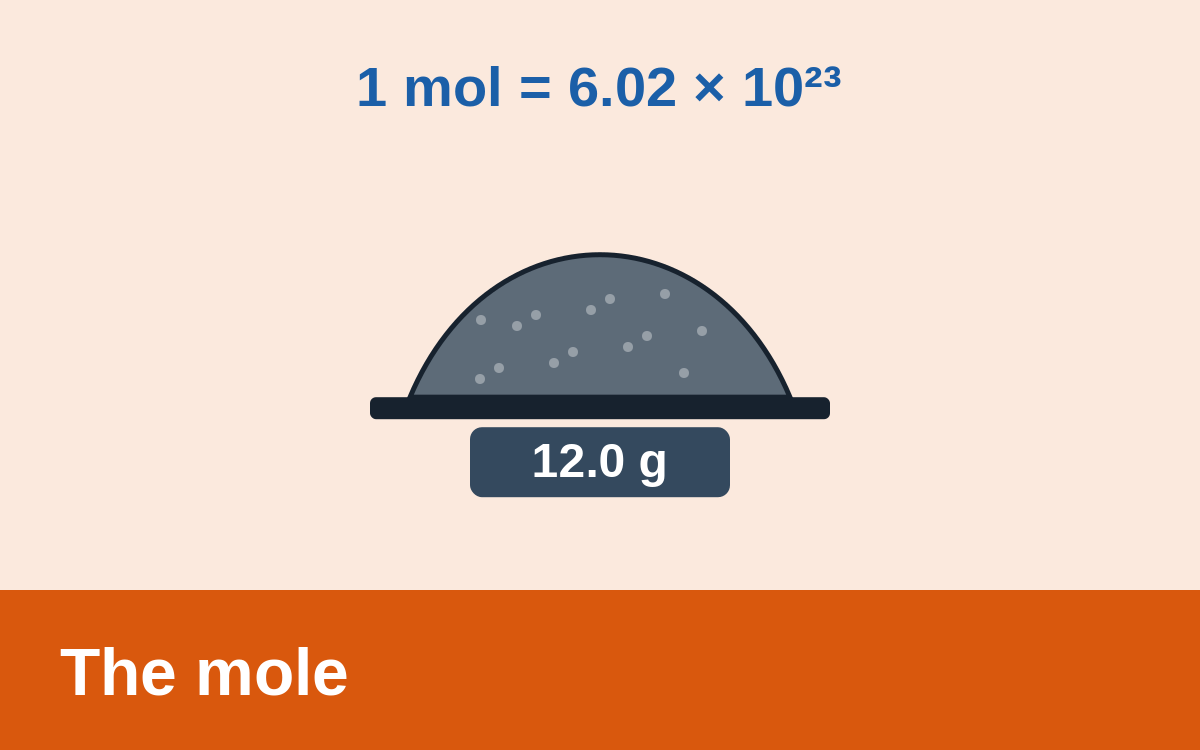
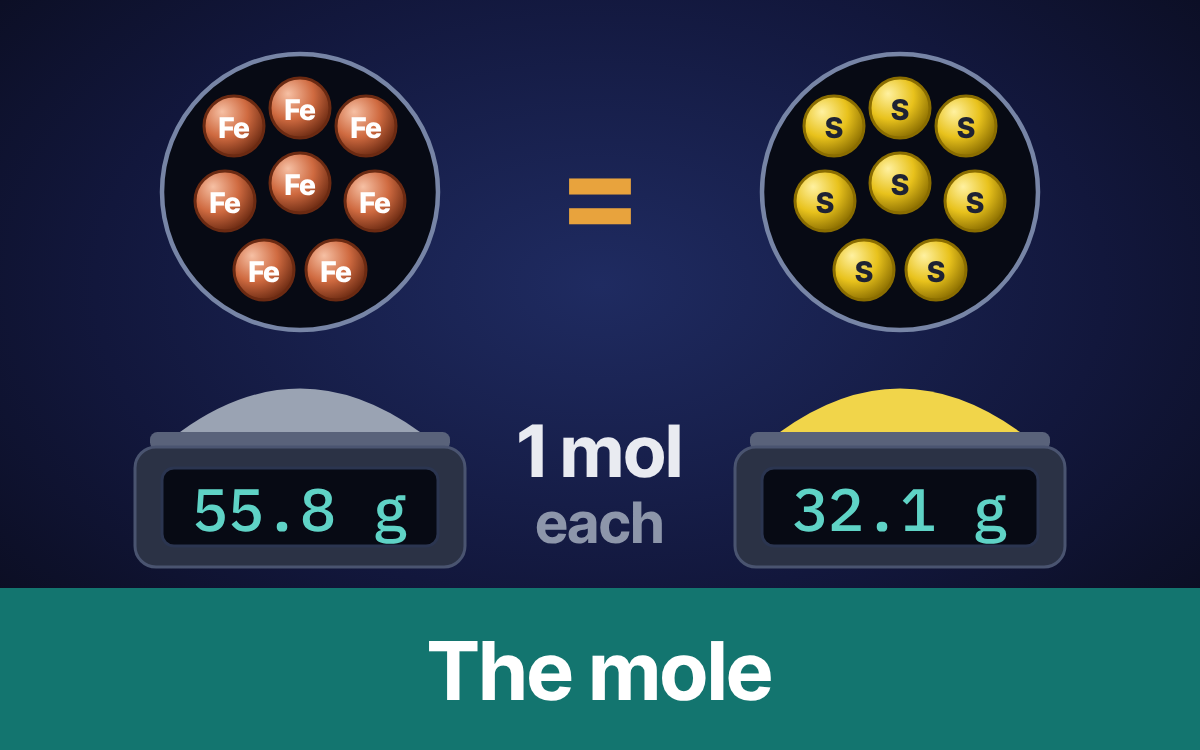 The mole: counting atoms by weighing
How chemists count atoms with a balance: the mole and the Avogadro constant.
-
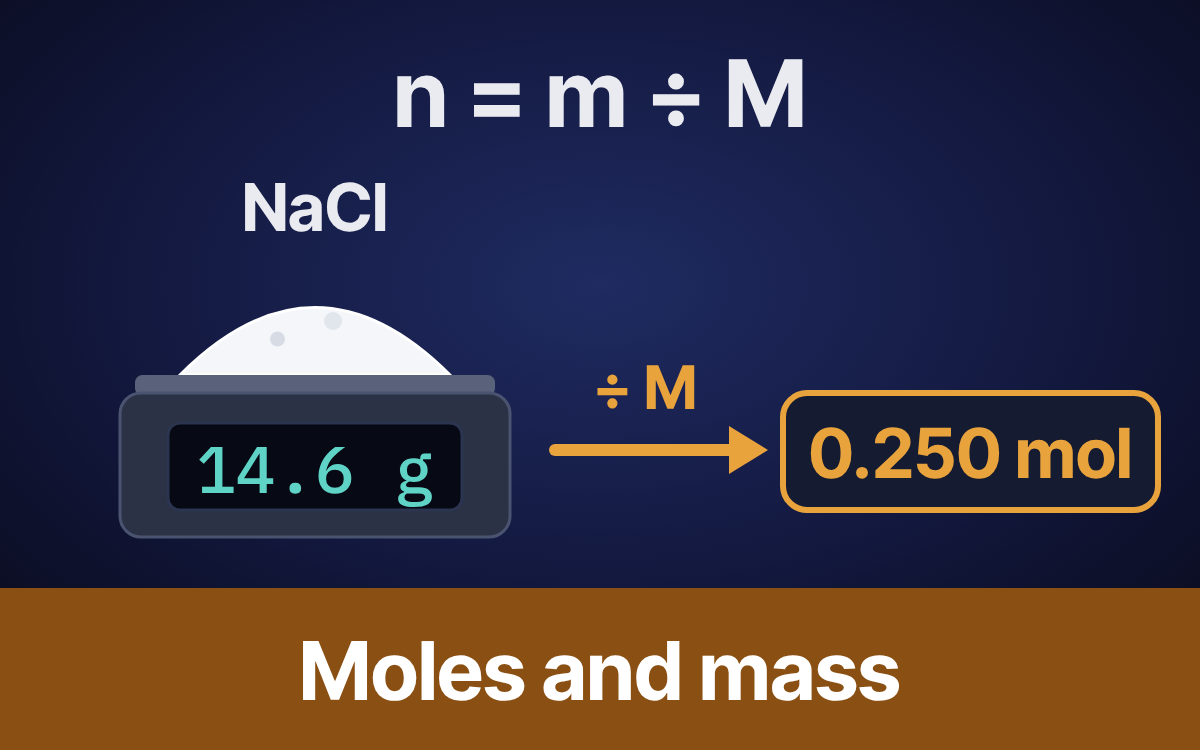 Moles, mass and atoms: n = m ÷ M
From a mass on a balance to an amount in moles, and on to the number of particles.
-
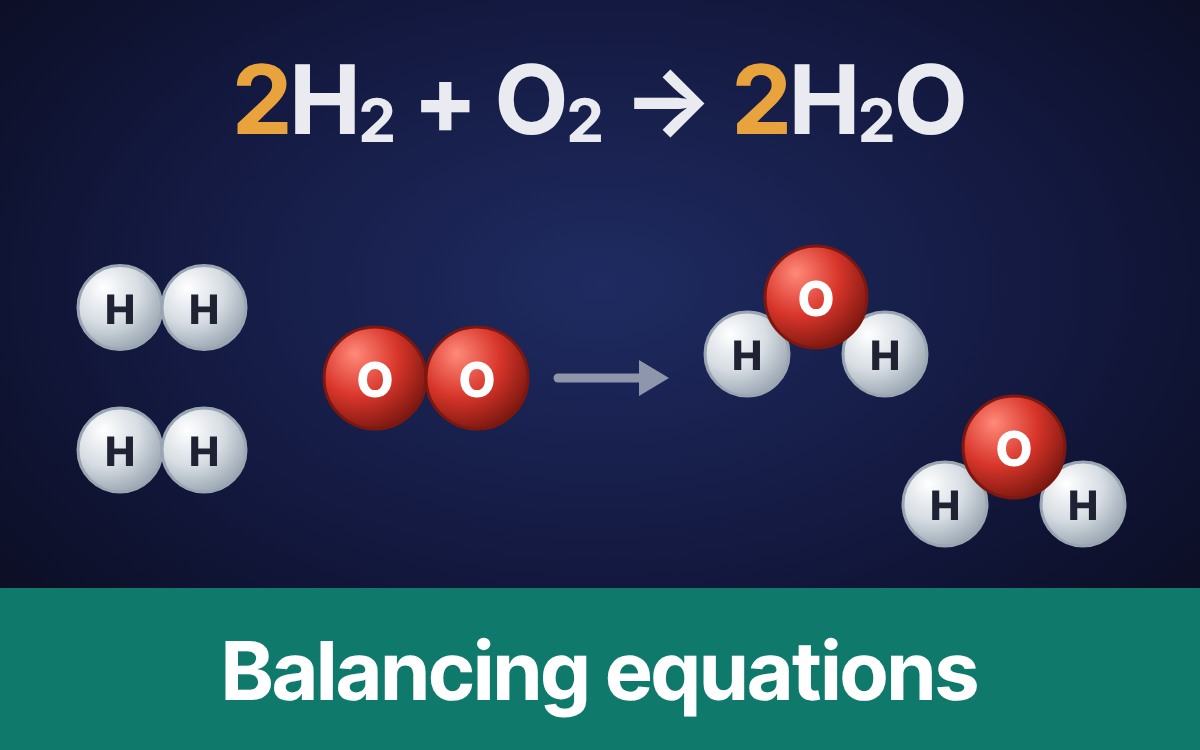 Balancing equations: change the numbers in front, never the formulas
H₂ + O₂ → H₂O loses an oxygen atom, and atoms cannot vanish. Learn to balance equations step by step: count the atoms, never change a formula, change how many, one element at a time, odd and even, halves, state symbols, and ionic equations where the charges balance too. Then balance equations yourself and answer questions laid out as on the exam paper. About 12 minutes.
-
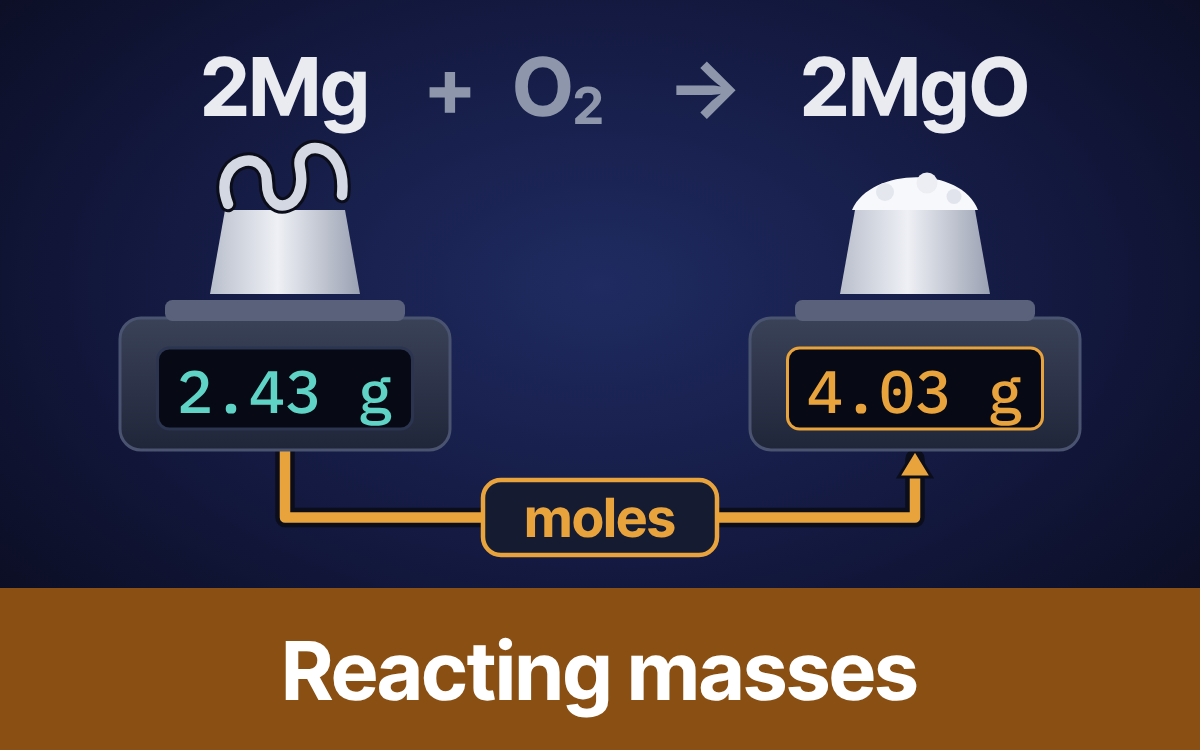 Reacting masses: from an equation to grams
From a balanced equation and one mass to the mass of every other substance in the reaction, through moles.
-
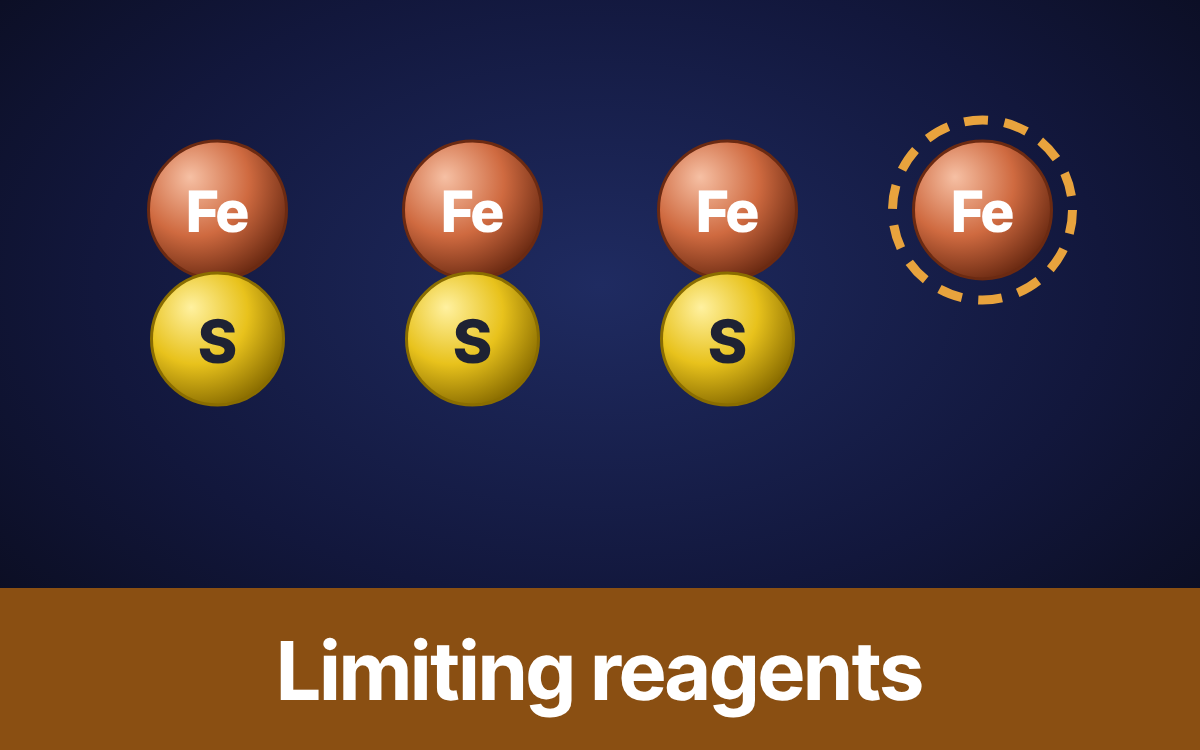 Limiting reagents: which reactant runs out?
When one reactant runs out first: how to find it, the product it allows, and how much of the other is left over.
- Learn Percentage yield and atom economy Coming soon
-
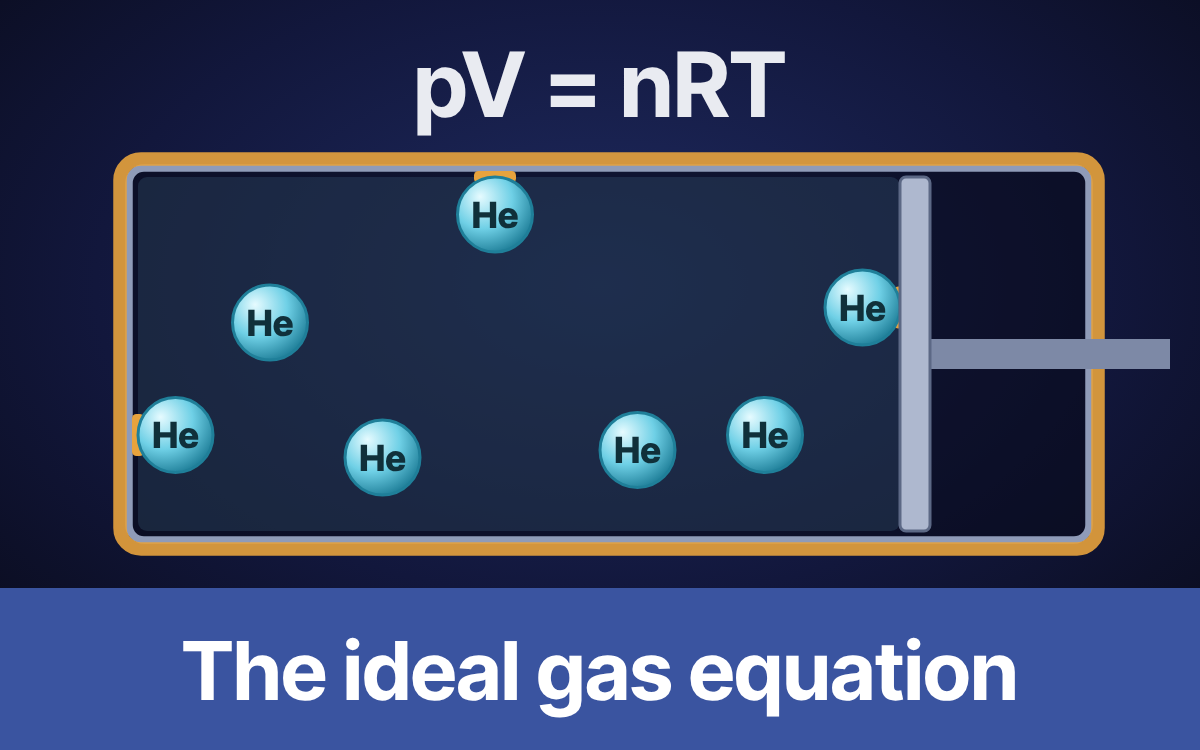 The ideal gas equation: pV = nRT
You cannot count the atoms in a cylinder of gas, so how do you find out how much is there? Squeeze, heat and fill a cylinder of helium to see how pressure, volume, temperature and amount are linked, put them into one equation, learn the unit conversions, and work out an amount of gas. Then move the quantities yourself and answer questions laid out as on the exam paper. About 12 minutes.
- Learn Empirical and molecular formulae Coming soon
-
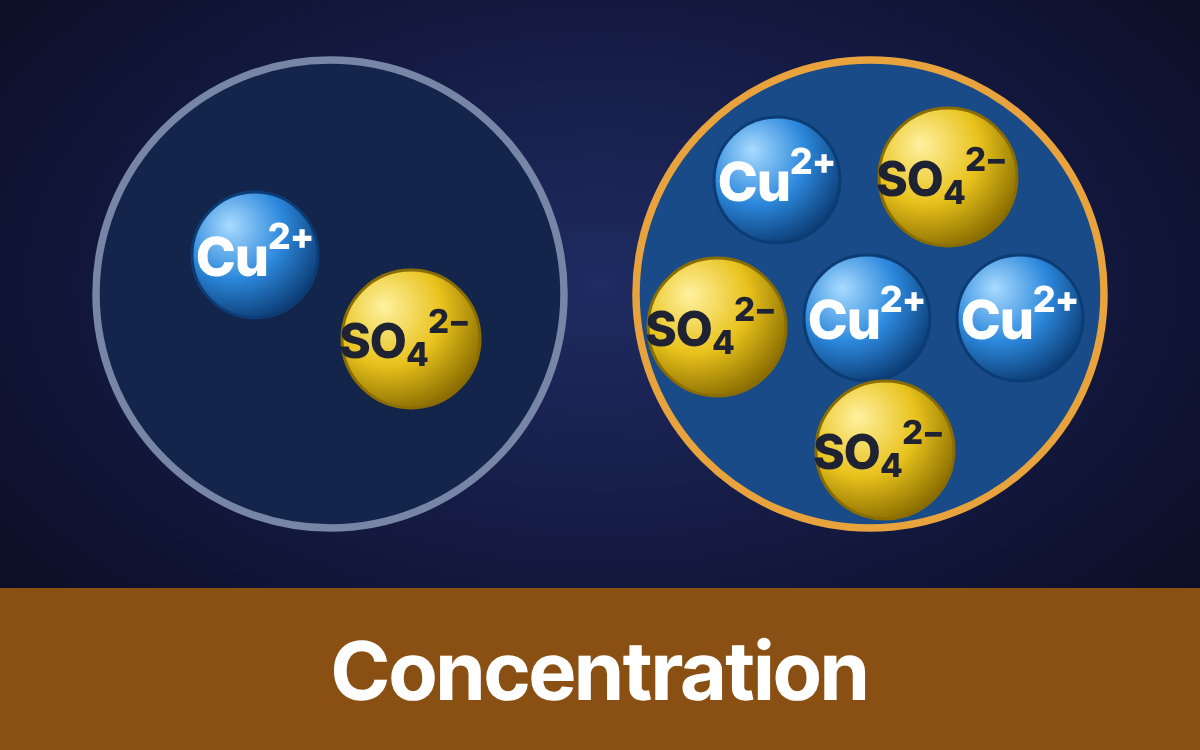 Concentration: moles in every cubic decimetre
How much is dissolved in each drop: c = n ÷ V in mol dm⁻³, volumes in cm³, making a solution of known concentration, dilution and the concentration of one ion.
-
 Titration calculations: finding an unknown concentration
Use a solution you know to measure one you do not: the titre, concordant titres, n = c × V, the ratio, c = n ÷ V, and a sample diluted first.