Chemistry you can see.
Free interactive lessons for A-level chemistry. Move the particles, change the numbers, then practise exam-style questions.
Start with Atomic structure Browse all topics
Free. No login. Works on a phone, a laptop or a classroom board.
Carry on where you left off: the last lesson
Newest lessons
-
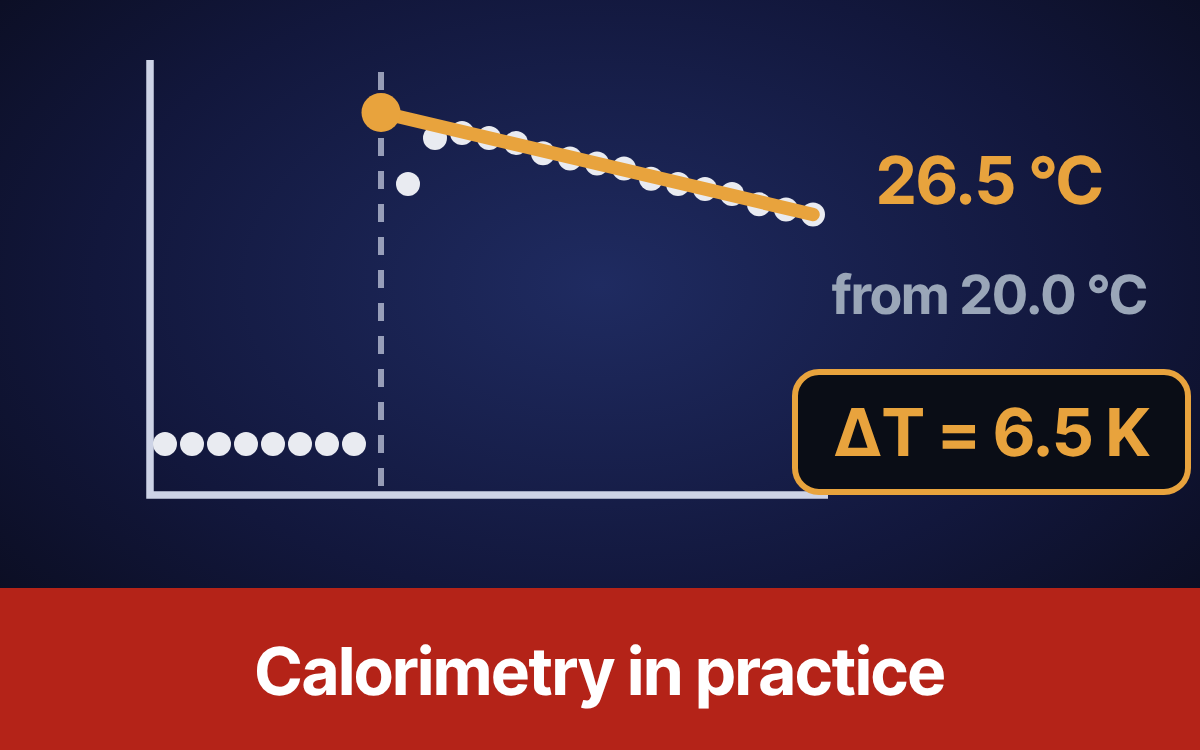 Calorimetry in practice: fuels, heat loss and cooling graphs
A camping stove burns about 40 cm³ of ethanol to boil a litre of water, yet that ethanol gives out nearly three times the heat the water needs: where does the rest go? Burn a fuel under a copper can and find ΔcH, follow the heat that escapes, draw a cooling line back to the time of mixing, then answer the stove.
-
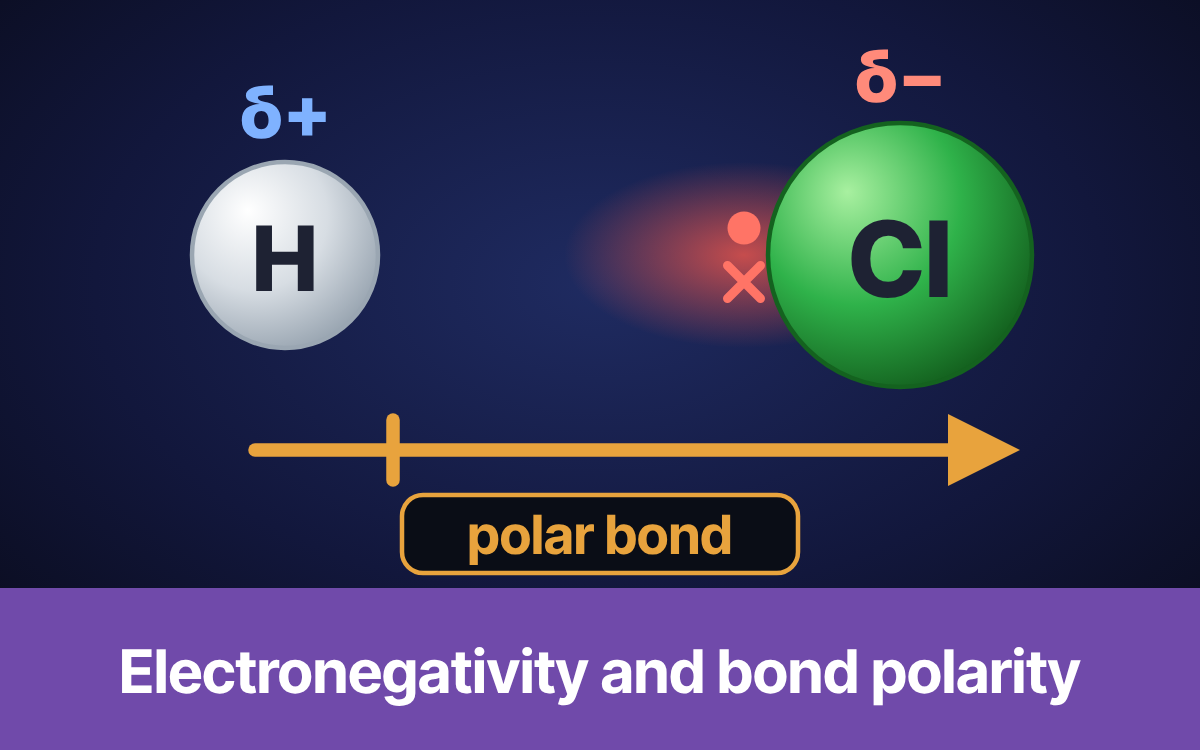 Electronegativity and bond polarity: polar bonds and polar molecules
A charged balloon pulls a stream of water sideways, while hexane runs straight. See a shared pair of electrons sit nearer the atom that pulls harder, label the bond δ+ and δ−, follow bonds from non-polar to ionic, and turn molecules by hand to see when their dipoles cancel and when they add up.
-
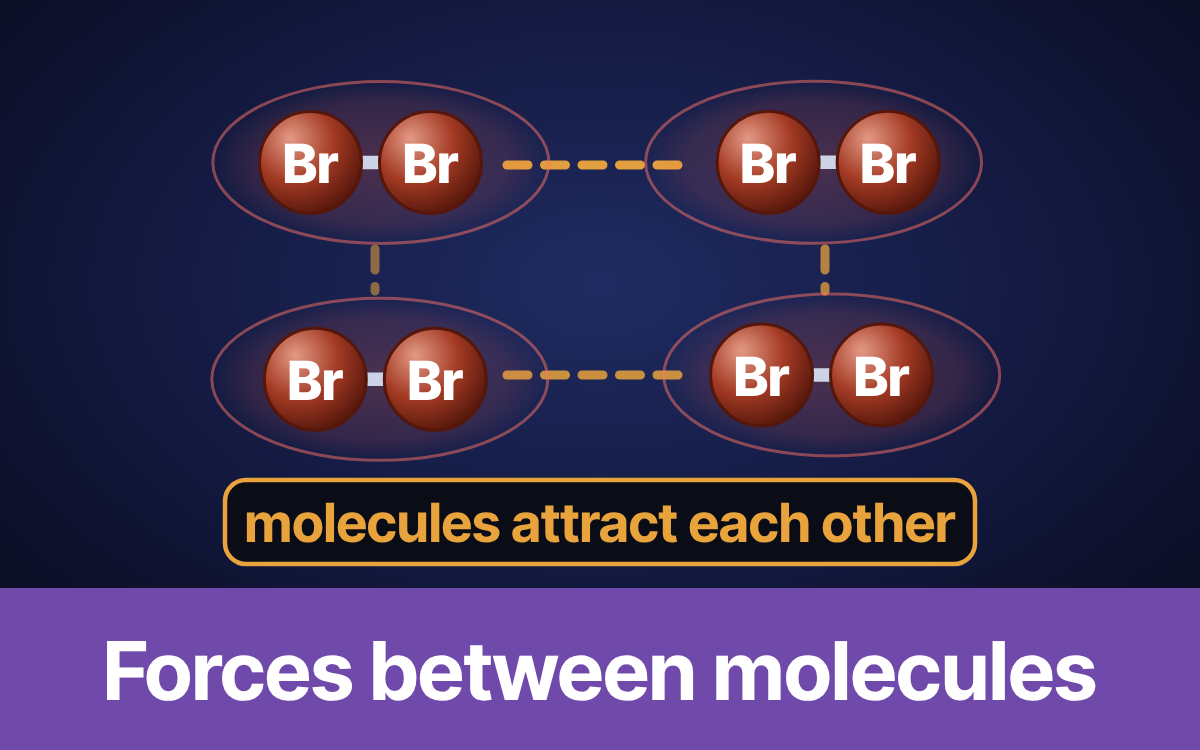 Forces between molecules: why boiling points differ
Chlorine is a gas, bromine a liquid and iodine a solid, yet they are the same kind of molecule. See molecules leave a boiling liquid whole, the flickering electron clouds that pull molecules together, permanent dipoles lining up, hydrogen bonds between water molecules, why water, ammonia and hydrogen fluoride boil so high, and why ice floats.
Browse by topic
● lessons ready ○ coming soon
Physical chemistry
- 3.1.1 Atomic structure , lessons ready
- 3.1.2 Amount of substance , lessons ready
- 3.1.3 Bonding , lessons ready
- 3.1.4 Energetics , lessons ready
- 3.1.5 Kinetics , lessons ready
- 3.1.6 Chemical equilibria , coming soon
- 3.1.7 Oxidation, reduction and redox equations , coming soon
- 3.1.8 Thermodynamics A-level only , coming soon
- 3.1.9 Rate equations A-level only , coming soon
- 3.1.10 The equilibrium constant Kp A-level only , coming soon
- 3.1.11 Electrode potentials and cells A-level only , coming soon
- 3.1.12 Acids and bases A-level only , coming soon
Inorganic chemistry
- 3.2.1 Periodicity , coming soon
- 3.2.2 Group 2, the alkaline earth metals , coming soon
- 3.2.3 Group 7, the halogens , coming soon
- 3.2.4 Period 3 elements and their oxides A-level only , coming soon
- 3.2.5 Transition metals A-level only , coming soon
- 3.2.6 Reactions of ions in aqueous solution A-level only , coming soon
Organic chemistry
- 3.3.1 Introduction to organic chemistry , coming soon
- 3.3.2 Alkanes , coming soon
- 3.3.3 Halogenoalkanes , lessons ready
- 3.3.4 Alkenes , coming soon
- 3.3.5 Alcohols , coming soon
- 3.3.6 Organic analysis , coming soon
- 3.3.7 Optical isomerism A-level only , coming soon
- 3.3.8 Aldehydes and ketones A-level only , coming soon
- 3.3.9 Carboxylic acids and derivatives A-level only , coming soon
- 3.3.10 Aromatic chemistry A-level only , coming soon
- 3.3.11 Amines A-level only , coming soon
- 3.3.12 Polymers A-level only , coming soon
- 3.3.13 Amino acids, proteins and DNA A-level only , coming soon
- 3.3.14 Organic synthesis A-level only , coming soon
- 3.3.15 NMR spectroscopy A-level only , coming soon
- 3.3.16 Chromatography A-level only , coming soon
For teachers
Each lesson has a teacher page with its objectives, the specification wording, the misconceptions it tackles and three ways to use it, plus present mode for the board. Free, with no accounts.
Missing something?
The coverage page shows every topic, what has a lesson and what is still to come. New lessons are added all the time.
Sitting a different exam board? OCR A, OCR B (Salters), Pearson Edexcel, WJEC Eduqas and CCEA are in development. Most of the chemistry is shared, so the lessons are useful now. Topic numbers and practice questions follow AQA until each board has its own.