3.1.4 AS and A-level
Energetics
Enthalpy changes, calorimetry, Hess's law and bond enthalpies.
The lessons, in order
Work through these in order. Lessons marked Coming soon are still being built.
-
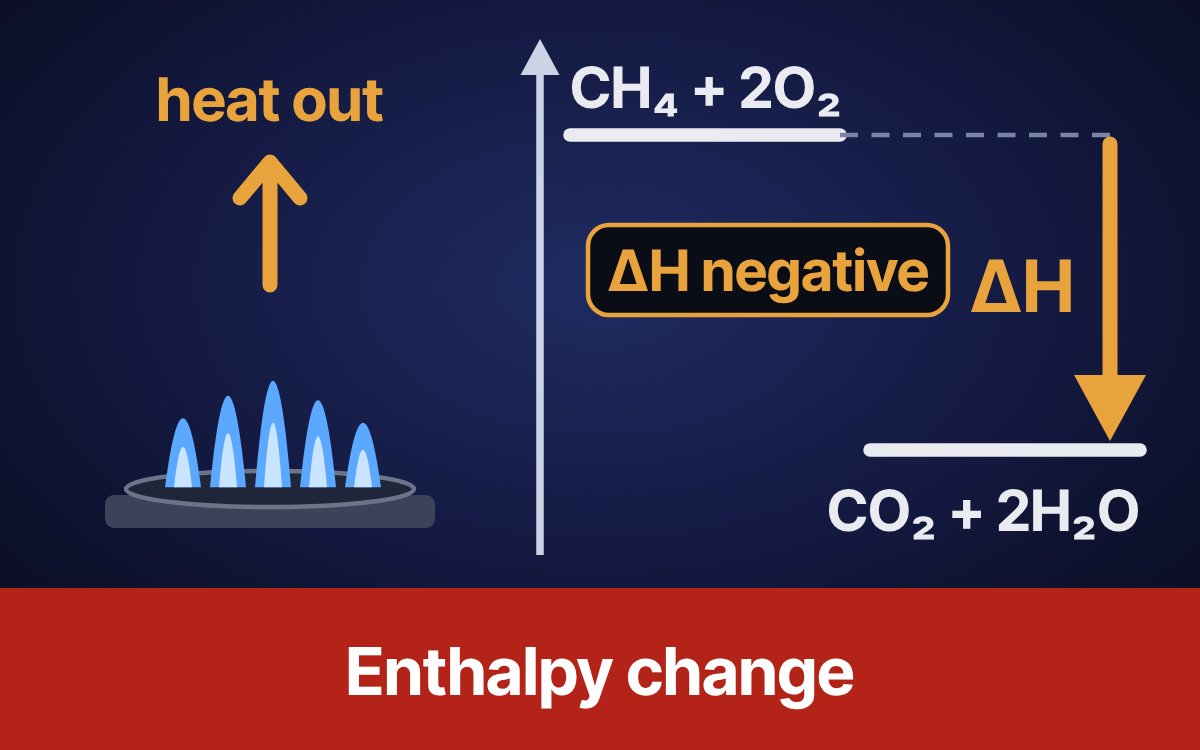 Enthalpy change: exothermic and endothermic
Natural gas sits cold in the pipes, yet burns hot on the hob. Watch a cup warm or cool as an enthalpy level diagram fills beside it, write ΔH with its sign, see the activation energy hump that keeps methane waiting for a spark, and learn what standard conditions are.
-
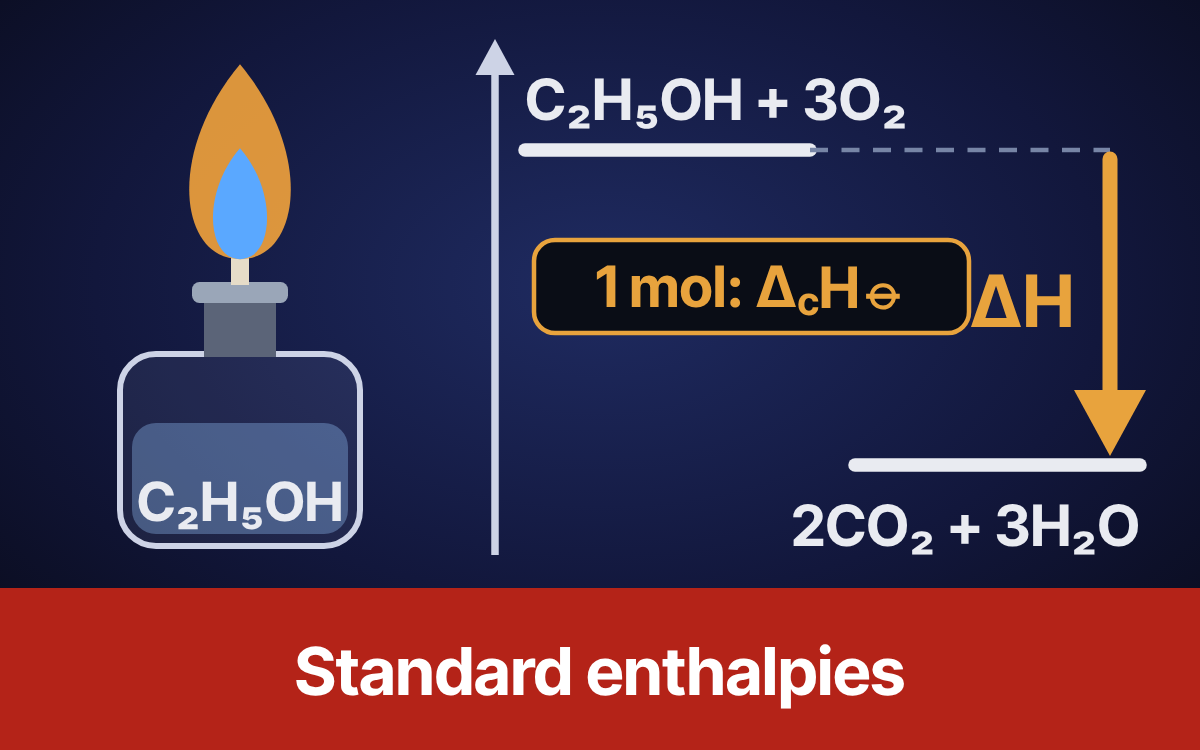 Standard enthalpy changes: formation and combustion
Methane, ethanol and hydrogen all burn: which gives the most heat? Count one mole under an enthalpy level diagram, build the definitions of the standard enthalpies of combustion and formation chip by chip, write their equations with fractions and state symbols, and find the answer per mole, per gram and per litre.
-
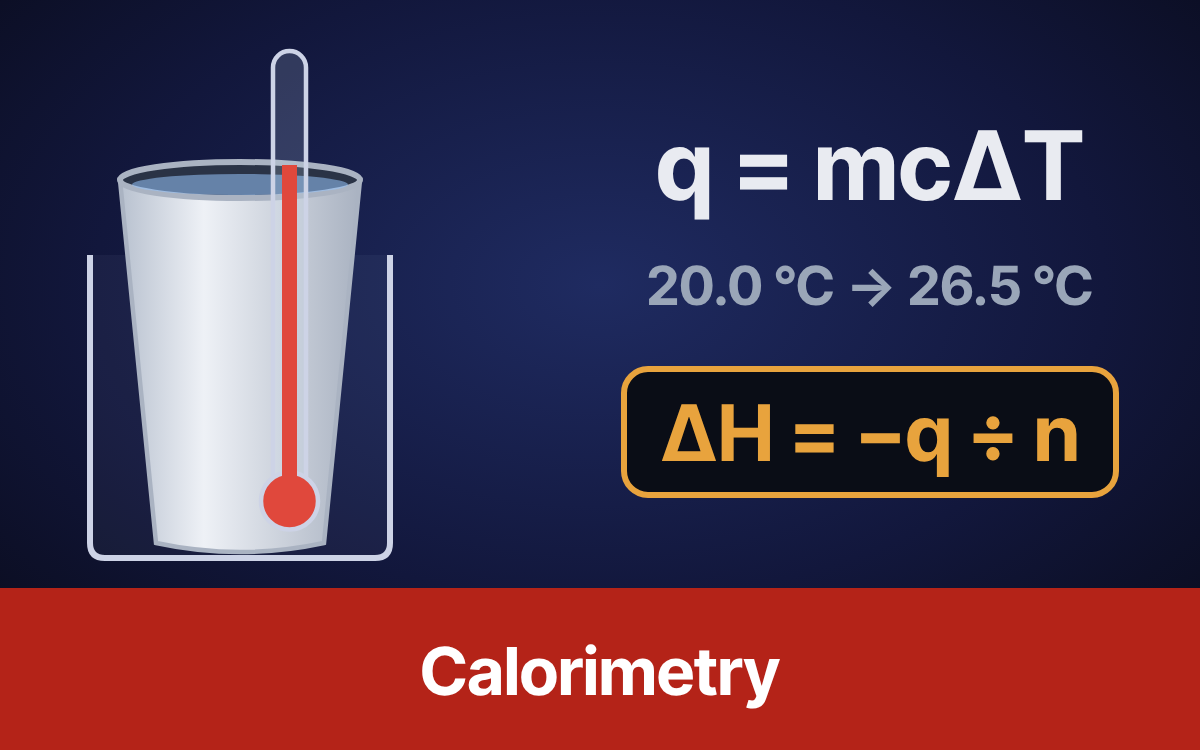 Calorimetry: from a temperature change to ΔH
Stomach acid is hydrochloric acid, and an indigestion tablet neutralises it, giving out heat: so why doesn't your stomach heat up? Fill the equation q = mcΔT term by term on a polystyrene cup, turn q into ΔH per mole with its sign and units, pour your own neutralisation, then run the working backwards to answer the stomach.
-
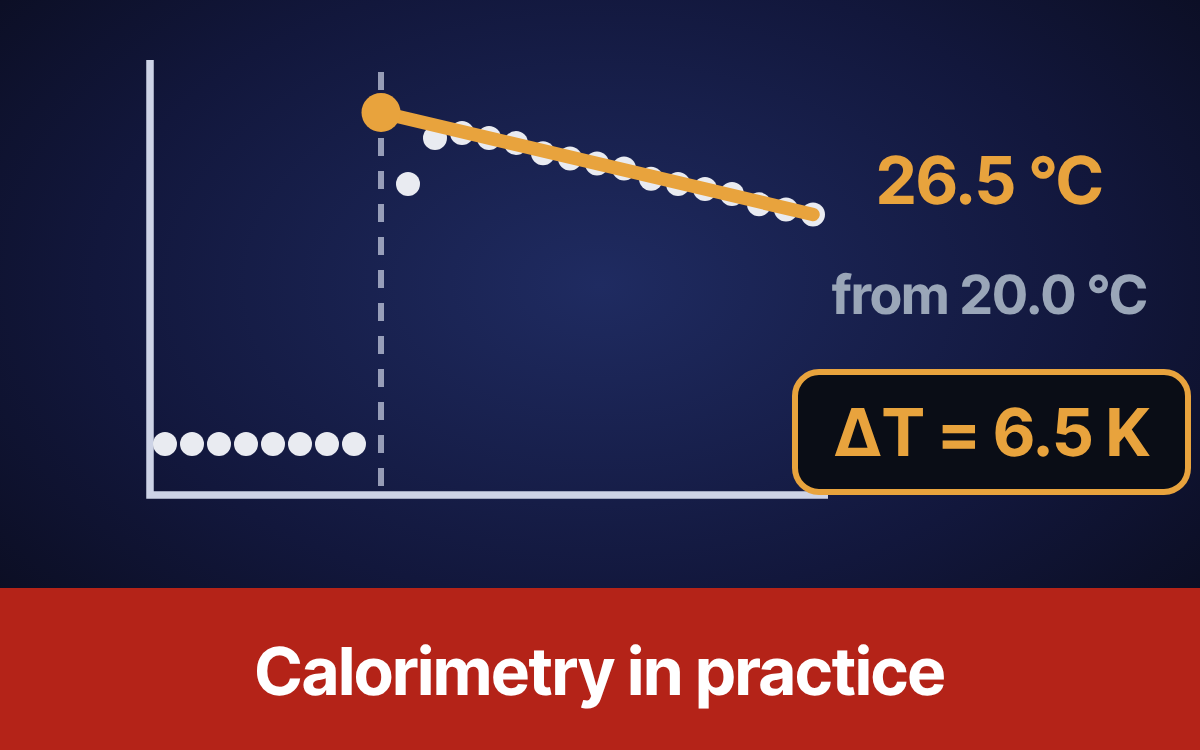 Calorimetry in practice: fuels, heat loss and cooling graphs
A camping stove burns about 40 cm³ of ethanol to boil a litre of water, yet that ethanol gives out nearly three times the heat the water needs: where does the rest go? Burn a fuel under a copper can and find ΔcH, follow the heat that escapes, draw a cooling line back to the time of mixing, then answer the stove.
- Learn Hess's law: enthalpy cycles Coming soon
- Learn Bond enthalpies: breaking and making bonds Coming soon