3.1.1 AS and A-level
Atomic structure
Fundamental particles; mass number and isotopes; electron configuration.
Fundamental particles
AQA 3.1.1.1. Work through these in order. Lessons marked Coming soon are still being built.
-
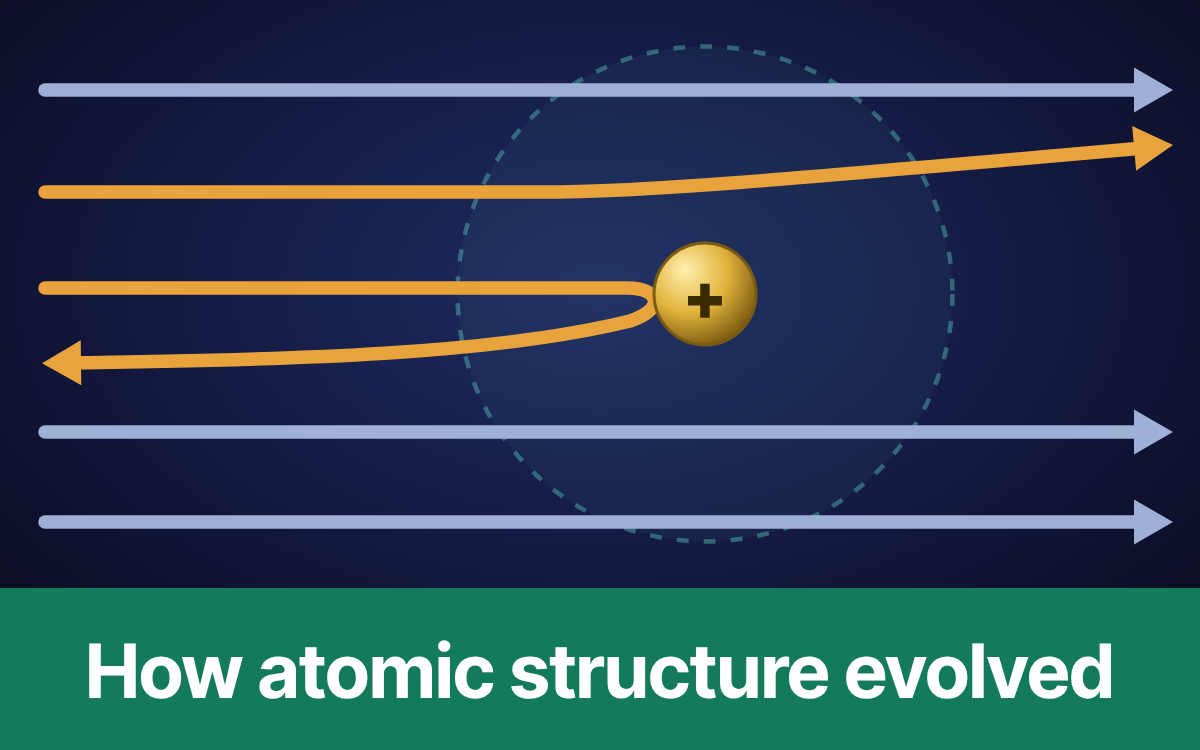 Atomic structure has evolved over time
How did scientists discover what is inside an atom? Follow the evidence from Dalton's solid spheres to today's atomic model. Investigate the gold (Au) foil experiment yourself, then practise exam-style questions. About 14 minutes.
-
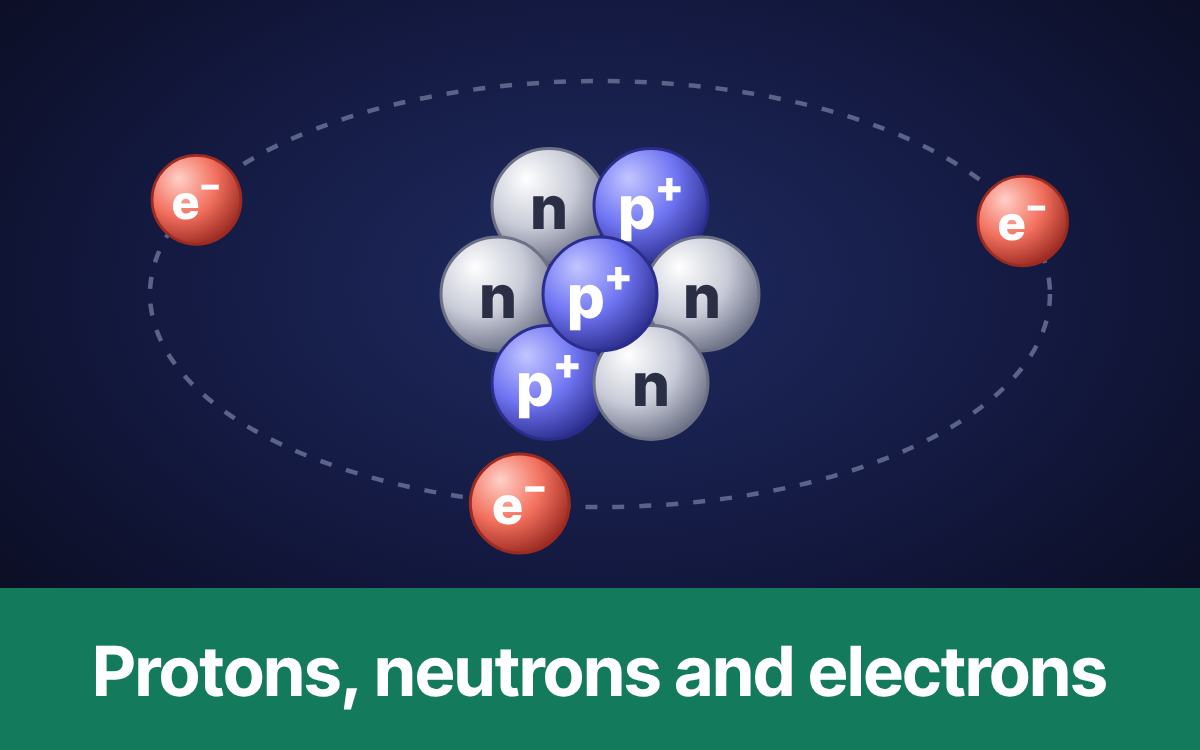 Protons, neutrons and electrons: relative charge and mass
Atoms are built from three types of particle: protons, neutrons and electrons. Discover where these particles are found, their relative charges and masses, what atomic number and mass number tell us, how to read nuclear symbols and how ions form. Then build atoms and ions yourself and answer exam-style questions. About 14 minutes.
Mass number and isotopes
AQA 3.1.1.2.
-
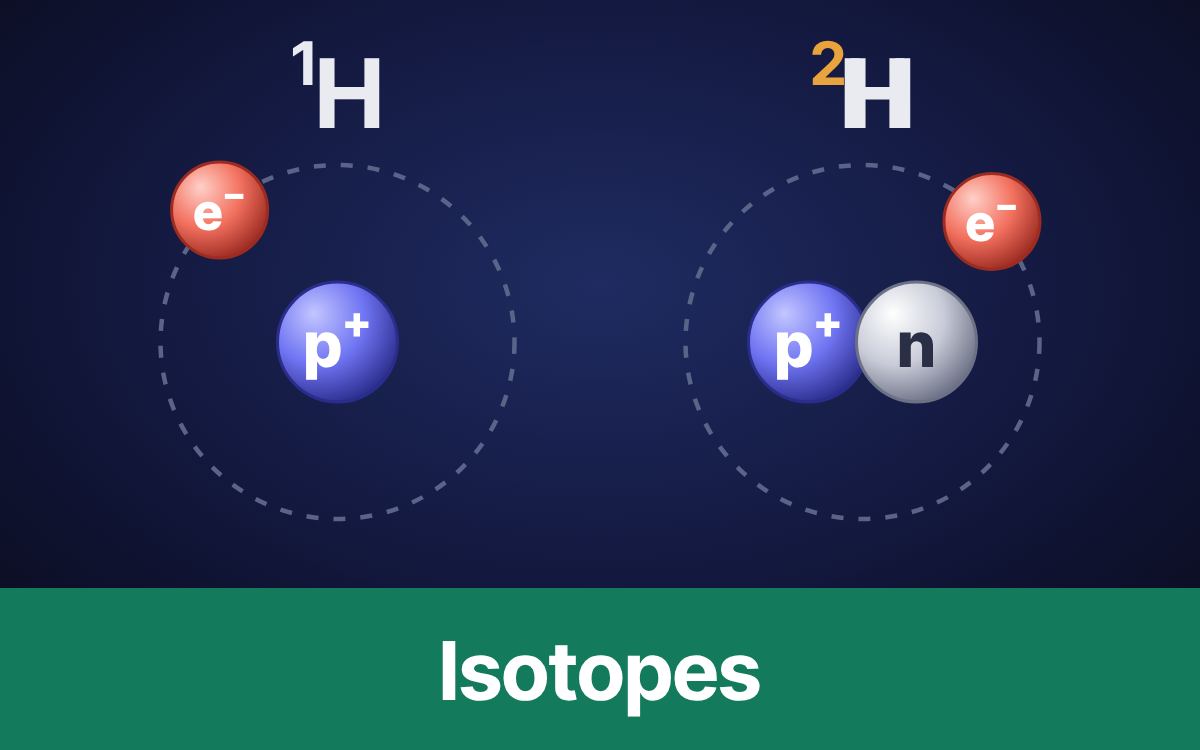 Mass number and isotopes
Two ice cubes look the same, but one floats and the other sinks. Find out what isotopes are and count the particles in their atoms and ions. Learn why isotopes have different masses but take part in the same chemical reactions. Then compare isotopes yourself and answer questions laid out as on the exam paper. About 12 minutes.
-
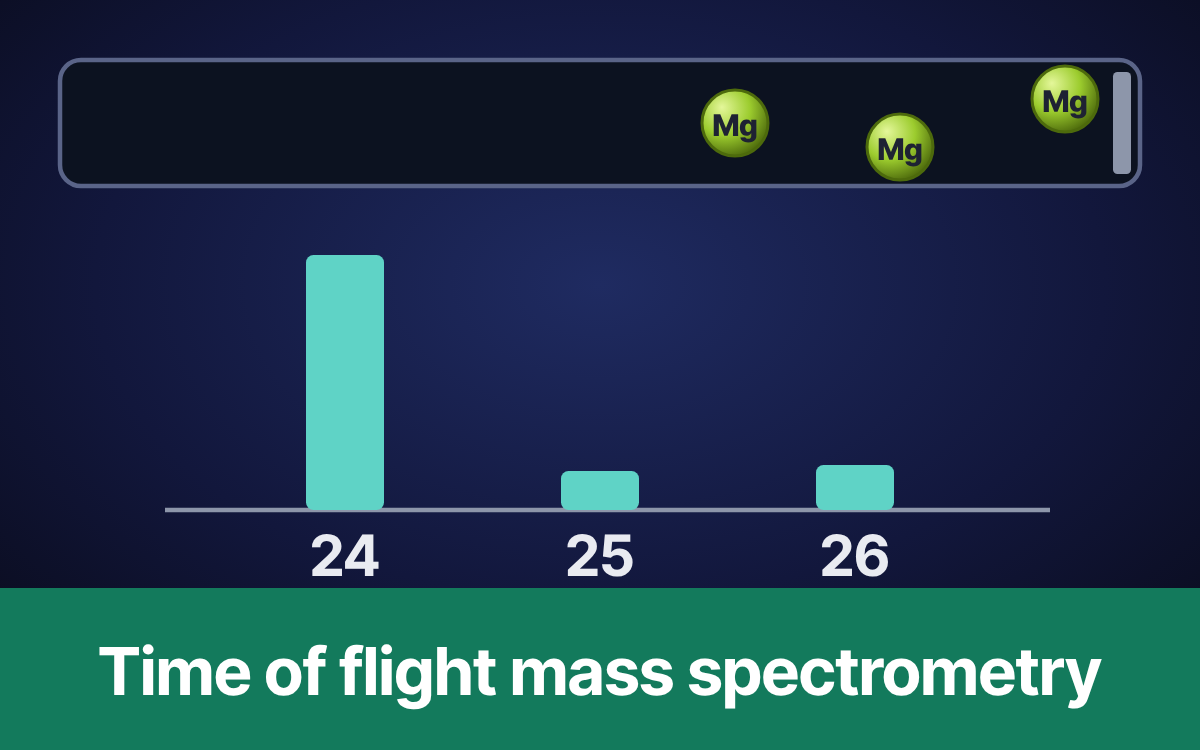 Time of flight mass spectrometry
No balance can weigh one atom, so how do we know how heavy atoms are? Follow magnesium through a time of flight mass spectrometer one stage at a time, read its spectrum, weigh a whole molecule by electrospray, then run the spectrometer yourself and answer questions laid out as on the exam paper. About 15 minutes.
-
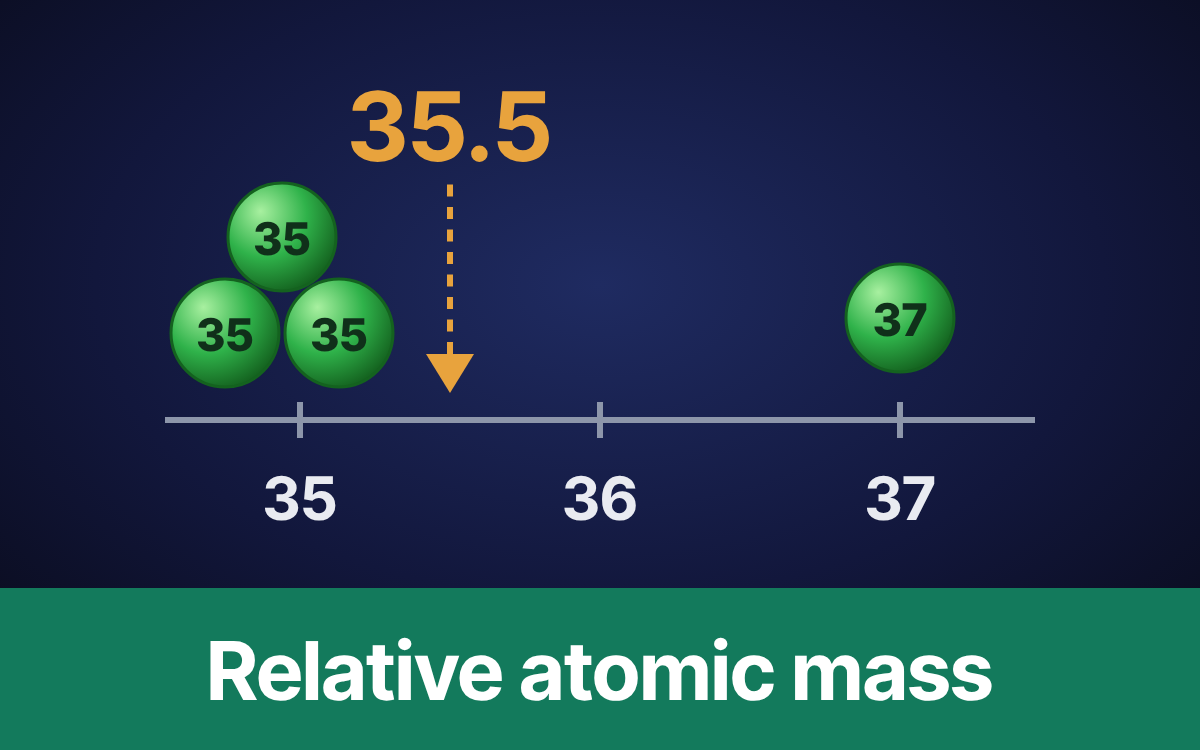 Relative atomic mass from isotopic abundance
No chlorine atom has a mass of 35.5, so why does the periodic table say 35.5? Build the average of a mixture of isotopes step by step, define relative atomic mass, calculate it from a mass spectrum, work back to an abundance, and meet relative molecular mass. Then mix the isotopes yourself and answer questions laid out as on the exam paper. About 12 minutes.
Electron configuration
AQA 3.1.1.3.
-
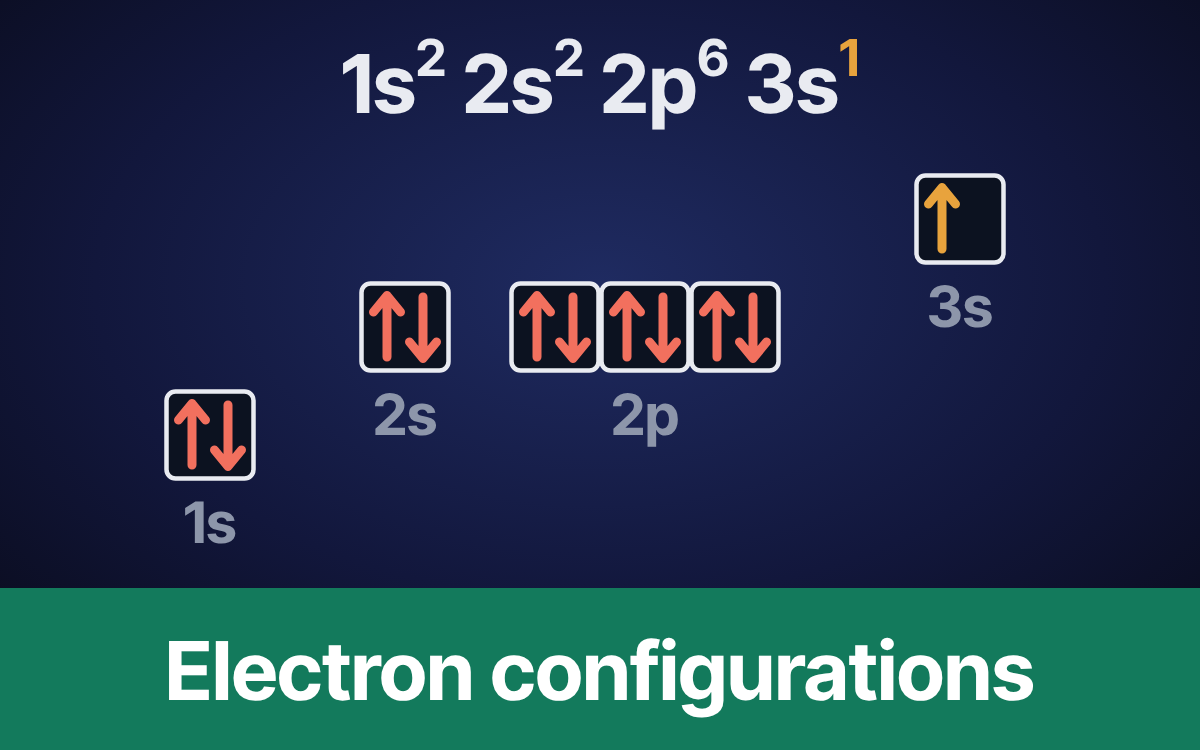 Electron configurations: shells and sub-shells (orbitals)
Neon reacts with nothing; sodium, with one more electron, reacts violently with water. Why? Build up how electrons are arranged, step by step: shells, sub-shells, orbitals and spin, the order of filling, writing a configuration, chromium and copper, and ions. Then fill atoms yourself and answer questions laid out as on the exam paper. About 15 minutes.
-
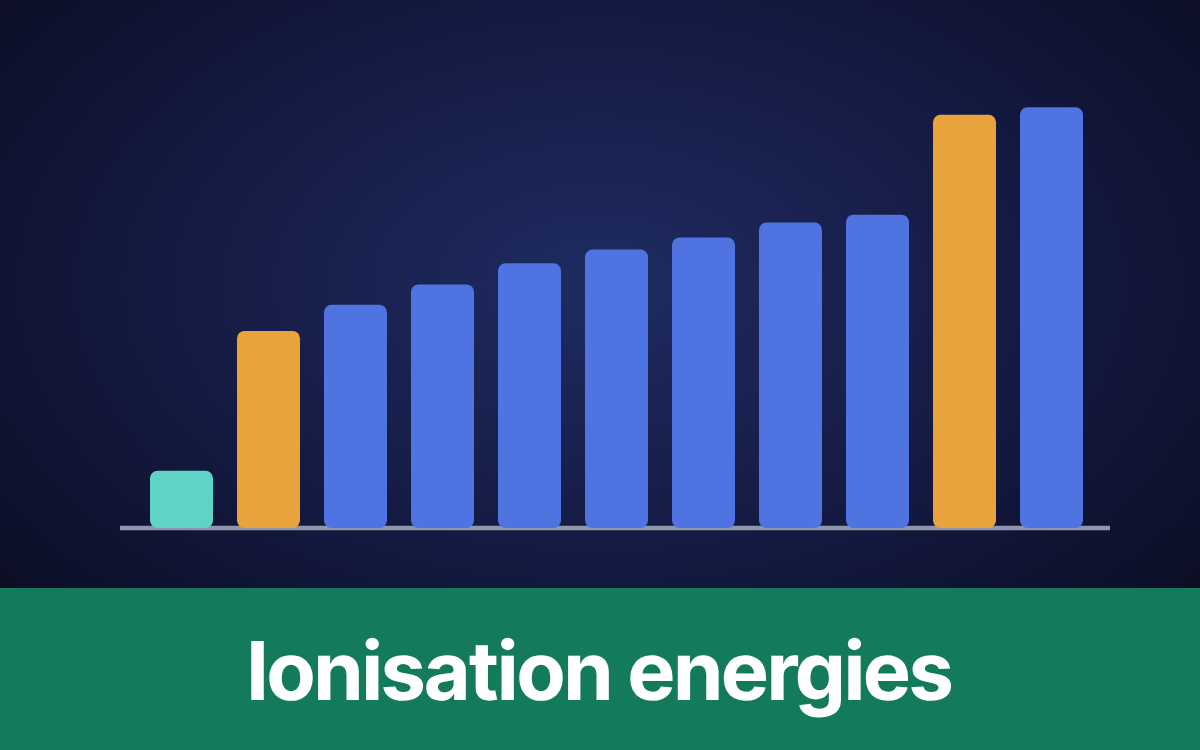 Ionisation energies: the evidence for shells and sub-shells
Sodium always forms Na⁺ and never Na²⁺. What stops the second electron leaving? Build up what an ionisation energy is, how to write its equation and what decides its size; then see how the jumps and dips in ionisation energies are the evidence for shells and sub-shells. Remove electrons yourself, then answer questions laid out as on the exam paper. About 15 minutes.